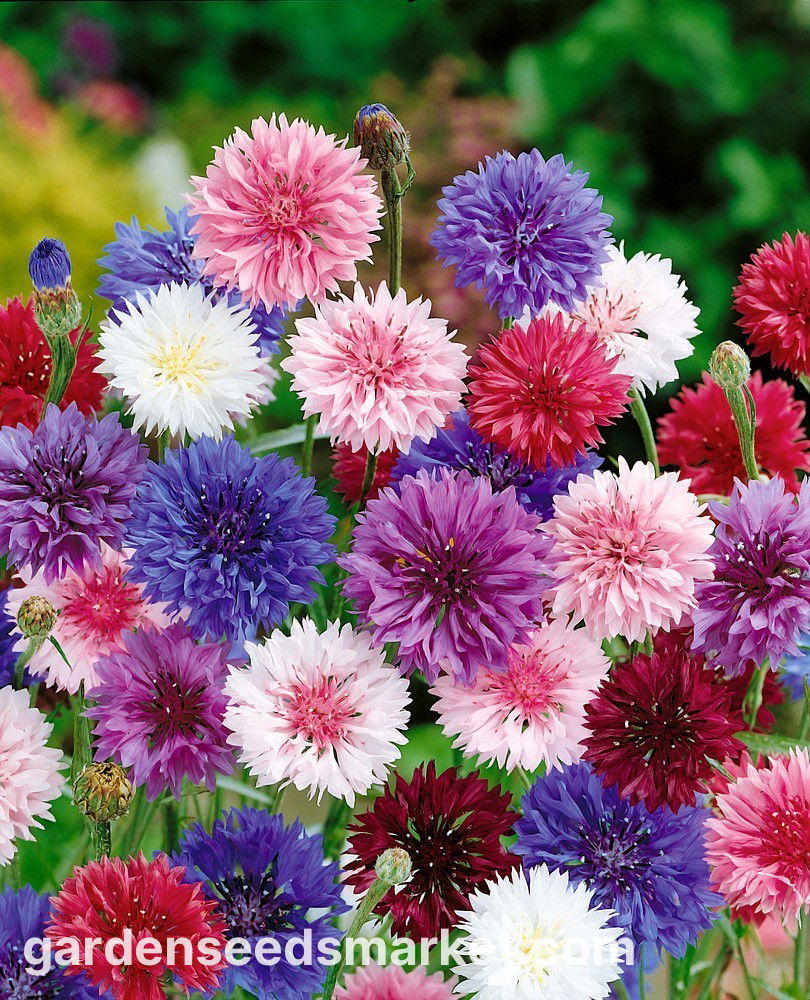


The Cornflower, known for its beautiful and colourful blooms, is an annual plant that will undoubtedly enliven any garden. Centaurea cyanus, as it is botanically named, is popular not only for its aesthetic appeal but also for its nectar-rich properties, attracting bees and other pollinating insects. Reaching a height of 30 to 80 cm, it features slender, branched stems and elongated, grey-green leaves. The Cornflower is a striking addition to flower beds, wildflower meadows, and naturalistic gardens, where it introduces a touch of wild beauty.
Sowing
Cornflowers are best sown directly into the ground, allowing them to develop quickly in natural conditions. Preparing the soil properly is essential to provide the seeds with the best germination conditions. It is advisable to avoid excessively wet areas, as too much water can negatively affect young plants' development.
Sowing Depth
The optimal sowing depth for Cornflower seeds is between 0.5 and 1.5 cm. This depth provides the seeds with suitable conditions for germination, protecting them from drying out and mechanical damage. Remember to gently cover the seeds with soil after sowing to shield them from being washed away by rain.
Direct Sowing Period
When should Cornflower seeds be sown directly into the ground? The best time for sowing is from March to May. It is beneficial to adjust the sowing time to local weather conditions to avoid frosts that could harm young seedlings. Early sowing allows for a longer flowering period, beautifying the garden throughout the summer.
Plant Spacing
Cornflowers require appropriate spacing to develop freely and display their flowers in full glory. It is recommended to plant them at a distance of 15x30 cm, ensuring enough space for growth and branching. This helps prevent overcrowding, which could lead to air circulation issues and fungal diseases.
Site Conditions
The Cornflower prefers sunny locations where it can fully benefit from sunlight. It thrives in well-drained, moderately moist soils with a slightly alkaline pH. While the plant is quite tolerant of various soil conditions, avoiding overly shaded and waterlogged areas is important, as these can weaken growth and flowering.
Flowering Period
The Cornflower blooms from June to September, delighting with a variety of colours—from classic blue to shades of red, pink, and even white. Its extended flowering period makes it an ideal plant for adding colour and life to the garden throughout the summer.
Usage
The Cornflower is an excellent choice for naturalistic gardens and wildflower meadows, where it can grow alongside other wildflowers. Its blooms are often used in bouquet arrangements and as decorative elements in cottage gardens. Thanks to its nectar-rich properties, the plant is a valuable ally for beekeepers, attracting bees and other pollinators, which contributes to increased biodiversity in the garden.
Good to Know
The Cornflower is a plant that not only adorns the garden but also supports its ecosystem. Cultivating this plant is straightforward and does not require specialist knowledge, making it an ideal choice for both novice and experienced gardeners. Cornflower seeds are also commonly used in wildflower meadow mixes, creating beautiful, colourful expanses.
Why Buy from Garden Seeds Market
Garden Seeds Market guarantees the highest quality seeds that have undergone rigorous laboratory testing to ensure high germination capacity. Customers appreciate the fast and secure delivery, as well as the professional service that is always ready to offer help and advice. Additionally, the store's offerings often include attractive promotions, allowing for the purchase of seeds at favourable prices. By buying from Garden Seeds Market, you can be confident in choosing tested and reliable products that bring satisfaction in cultivation.
The package contains 100 g of seeds. The packaging includes information on cultivation guidelines and the expiry date for sowing.