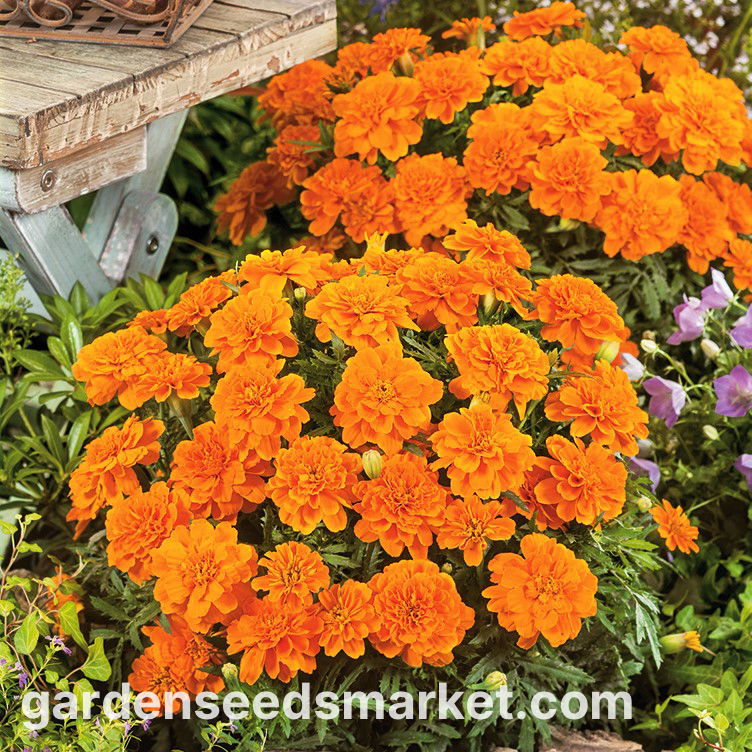
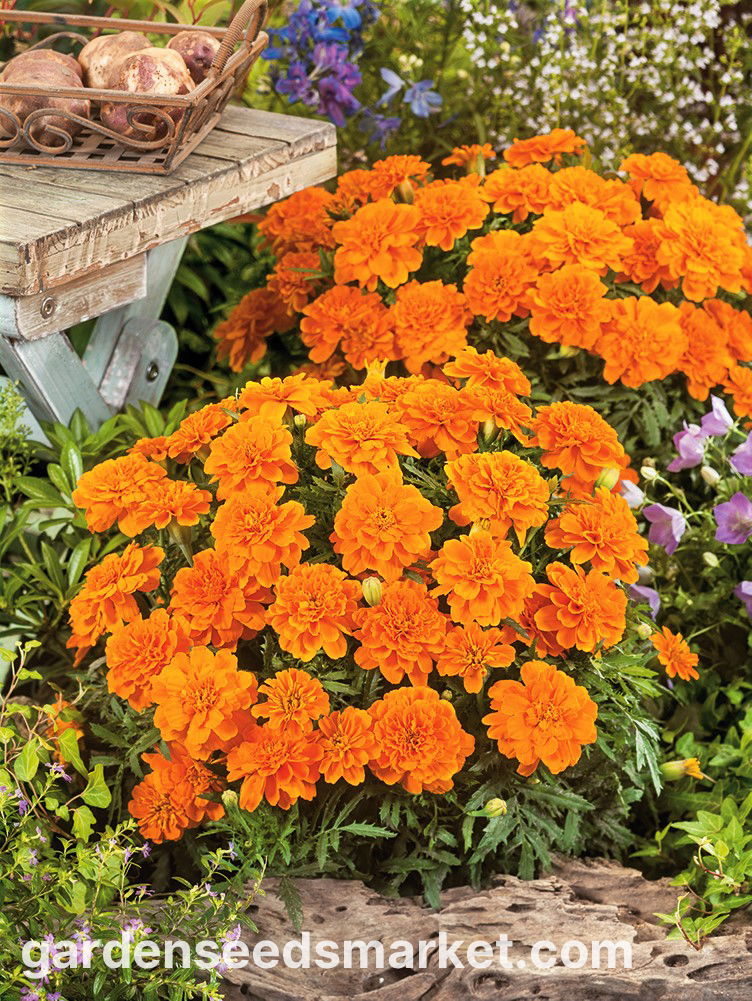


Dwarf French Marigold 'Tangerine' is a remarkable variety of Tagetes patula, celebrated for its vibrant orange glow and splendid floral form. This annual plant, reaching heights of 20 to 30 cm, is perfect for adorning borders, flower beds, edging, and balconies. Due to its early blooming nature, the 'Tangerine' marigold flowers profusely and consistently throughout the season, making it an excellent choice for any garden. The seeds of this plant have been meticulously selected to ensure high quality and reliability in cultivation. The positive feedback from satisfied customers confirms its outstanding ornamental qualities and ease of care.
Sowing
The 'Tangerine' marigold thrives best when seeds are gently placed on the soil's surface and then lightly covered with earth. This ensures the seeds have optimal conditions for germination and growth. It's important to remember regular watering to keep the soil slightly moist, promoting the vigorous growth of young plants.
Sowing Depth
The seeds of the 'Tangerine' marigold should be sown at a depth of 0.5 to 1 cm. This provides optimal conditions for germination and allows for the rapid development of the plant. Avoid planting too deeply, as this may hinder their emergence.
Direct Sowing Period
When is the best time to sow 'Tangerine' marigold seeds directly into the ground? The ideal time is May. Pay attention to soil temperature, ensuring it is suitably warmed. This is crucial for giving the plant a healthy start and allowing it to develop quickly.
Sowing Period Under Cover
When to sow 'Tangerine' marigold seeds under cover? March and April are ideal. Sowing under cover allows for an early start to the growing season and protects young plants from adverse weather conditions.
Planting Time
It is best to plant 'Tangerine' marigolds in May, when the ambient temperature is stable and conducive to plant growth. This encourages quick rooting and lush development throughout the season.
Plant Spacing
The recommended spacing for 'Tangerine' marigolds is 25x15 cm. This distance between plants provides ample space for unrestricted growth and development, as well as facilitating care.
Companion Planting
'Tangerine' marigold harmonises well with other ornamental plants such as sage, lavender, and petunias. Their presence enriches the visual appeal of the garden and creates a harmonious composition.
Site Conditions
The 'Tangerine' marigold prefers well-sunlit positions, which guarantees abundant flowering and the intensity of the flower colours. The soil should be well-drained, moderately moist, and nutrient-rich. Regular organic fertilisation will positively influence its growth. The plant also fares well in slightly shaded areas, although it is most striking in full sun.
Growing Tips
When cultivating 'Tangerine' marigolds, pay attention to regularly removing faded flowers, which stimulates the plant to produce new buds. Regular watering, especially during dry periods, is crucial for its health and abundant flowering. The plant is low-maintenance, making it an ideal choice even for novice gardeners.
Plant Height
'Tangerine' marigolds reach a height of 20 to 30 cm, making them perfect for creating low borders and decorative balcony arrangements. Their compact foliage and intensely orange flowers add charm to any space.
Flowering Period
The 'Tangerine' marigold flowers from June to October, providing long-lasting and colourful garden decorations throughout summer and early autumn. Its flowers attract attention and add vibrancy to any arrangement.
Usage
The 'Tangerine' marigold is versatile in its use. It can be used in borders, flower beds, to create edges, and in balcony arrangements. Its intense colour contrasts beautifully with other plants, adding dynamism and freshness to every corner of the garden. Due to its resistance to adverse weather conditions, it performs excellently in urban gardens and public green spaces.
Resistance to Diseases
The 'Tangerine' marigold exhibits high resistance to most plant diseases, making it a reliable choice for any garden. Its natural properties repel many pests, further simplifying care.
Good to Know
Marigolds are known to deter certain garden pests, such as nematodes, acting as a natural protective barrier for other plants. Their flowers are also edible and can be used as a decorative element in dishes, adding colour and originality. This plant requires no specialised care, making it an ideal choice for novice gardeners and those who appreciate easy cultivation.
Why Buy from Garden Seeds Market
Purchasing 'Tangerine' marigold seeds from the Garden Seeds Market ensures top quality and reliability. The seeds are meticulously selected and subjected to rigorous quality testing, guaranteeing excellent germination properties. The store offers a wide range of gardening products, fast delivery, and professional advice, making shopping enjoyable and secure. The positive feedback from satisfied customers confirms that Garden Seeds Market is where a passion for gardening meets the highest quality of service.
The package contains 1 kg of seeds. On the packaging, you will find information about cultivation guidelines and the sowing expiry date.