- US Dollars ($)
- Euro (€)
- GB Pound (£)
- Chinese Yuan (元)
- Swedish krona (kr)
- Russian ruble (₽)
- Hong Kong dollar (HK$)
- Norwegian krone (kr)
- Indian rupee (₹)
- New Taiwan dollar (NT$)
- Danish krone (kr)
- Hungarian forint (Ft)
- Saudi riyal (SR)
- Czech koruna (Kč)
- Israeli shekel (₪)
- Indonesian rupiah (Rp)
- Japanese yen (¥)
- Korean won (₩)
- Malaysian ringgit (RM)
- Romanian leu (leu)
- Swiss franc (Fr.)
- Serbian dinar (din)
- Vietnamese đồng (₫)
- Ukrainian hryvnia (₴)
- Turkish lira (₺)
- Thai baht (฿)
- CAD Dollars ($)
- English
- German - Deutsch
- French - Français
- Spanish - Español
- Italian - Italiano
- Swedish - Svenska
- Norwegian - Norsk
- Danish - Dansk
- Nederlands
- Estonian - Eesti keel
- Finnish - Suomalainen
- Hungarian - Magyar
- Latvian - Latviešu valoda
- Lithuanian - Lietuvių
- Portuguese - Português
- Bulgarian - български
- Czech - Čeština
- Croatian - Hrvatski
- Romanian - Română
- Slovak - Slovák
- Slovenian - Slovenščina

- Categories
-
Seeds
-
Vegetable Seeds
-
Flower Seeds
-
- Ageratum, Flossflower seeds
- Alyssum seeds
- Amaranth Seeds
- Aquilegia, Columbine seeds
- Aster seeds
- Aubrieta Seeds
- Begonia seeds
- Bellis perennis, Daisy seeds
- Californian Poppy Seeds
- Campanula, Bellflower seeds
- Celosia, Cocksbomb seeds
- Centaurea, Cornflower seeds
- Chrysanthemum, Painted Daisy seeds
- Coleus seeds
- Convolvulus seeds
- Coreopsis seeds
- Cosmos seeds
- Datura seeds
-
- Dianthus, Carnation seeds
- Echinacea, Coneflower seeds
- Flower seed mixtures
- Forget me not seeds
- Foxglove seeds
- Gaillardia Seeds
- Gazania seeds
- Geranium, Pelargonium seeds
- Godetia seeds
- Gourd, Ornamental squash seeds
- Gypsophila, Baby's Breath seeds
- Hollyhock seeds
- Impatiens seeds
- Ipomoea, Morning glory seeds
- Calabash, Bottle Gourd seeds
- Larkspur, Delphinium seeds
- Limonium, Statice seeds
- Lobelia seeds
-
- Lupin, Lupine seeds
- Lychnis, Catchfly seeds
- Mallow Seeds
- Marigold, Tagetes seeds
- Milkweed Seeds
- Nasturtium seeds
- Nemesia seeds
- Nepeta, catmint seeds
- Nicotiana, Ornamental Tobacco seeds
- Nigella, Love in a mist seeds
- Pansy seeds
- Petunia and Surfinia seeds
- Phlox seeds
- Poppy seeds
- Primula, Primrose seeds
- Pulsatilla, Pasque flower seeds
- Red Valerian, Centranthus Seeds
- Ricinus, Castor bean seeds
-
- Runner bean seeds
- Safflower seeds
- Salvia, Ornamental sage seeds
- Snapdragon Seeds
- Stock seeds
- Strawflower, Golden everlasting seeds
- Sunflower seeds
- Sweet pea seeds
- Toadflax Seeds
- Tunbergia, Black-eyed Susan Vine seeds
- Verbascum, Mullein seeds
- Verbena seeds
- Veronica, Speedwell seeds
- Viola, Violet seeds
- Zinnia seeds
-
- Herb Seeds
- Sprouting Seeds
-
Flower Bulbs
-
Garden Equipment
-
At home
- Around home
-
Fertilizers
-
- All-purpose fertilizers
- Autumn and winter fertilizers
- Blueberry fertilizers
- Boxwood fertilizers
- Bulb plants' fertilizers
- Grass and lawn fertilizers
- Citrus plant fertilizers
- Compost
- Conifer fertilizers
- Dolomite and lime fertilizers
- Dry powder fertilizers
- Fertilizers for balcony and terrace plants
- Fertilizers for moss-infected lawns
- Fertilizers in pump sprayers
-
- Fertilizers in watering cans
- Fertilizers sticks
- Fertilizers with leaf shine
- Flowering plant fertilizers
- Fruit fertilizers
- Fruit tree fertilizers
- Garden plant fertilizers
- Gel fertilizers
- Geranium fertilizers
- Green plant fertilizers
- Herb fertilizers
- Home plant fertilizers
- Hydrangea fertilizers
- Lavender fertilizers
-
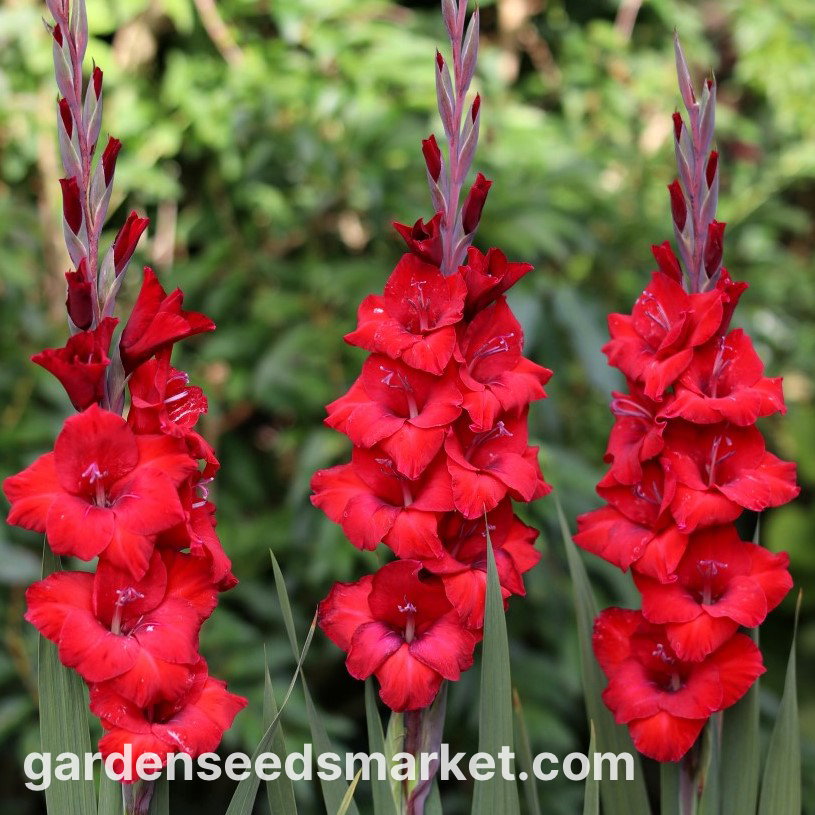
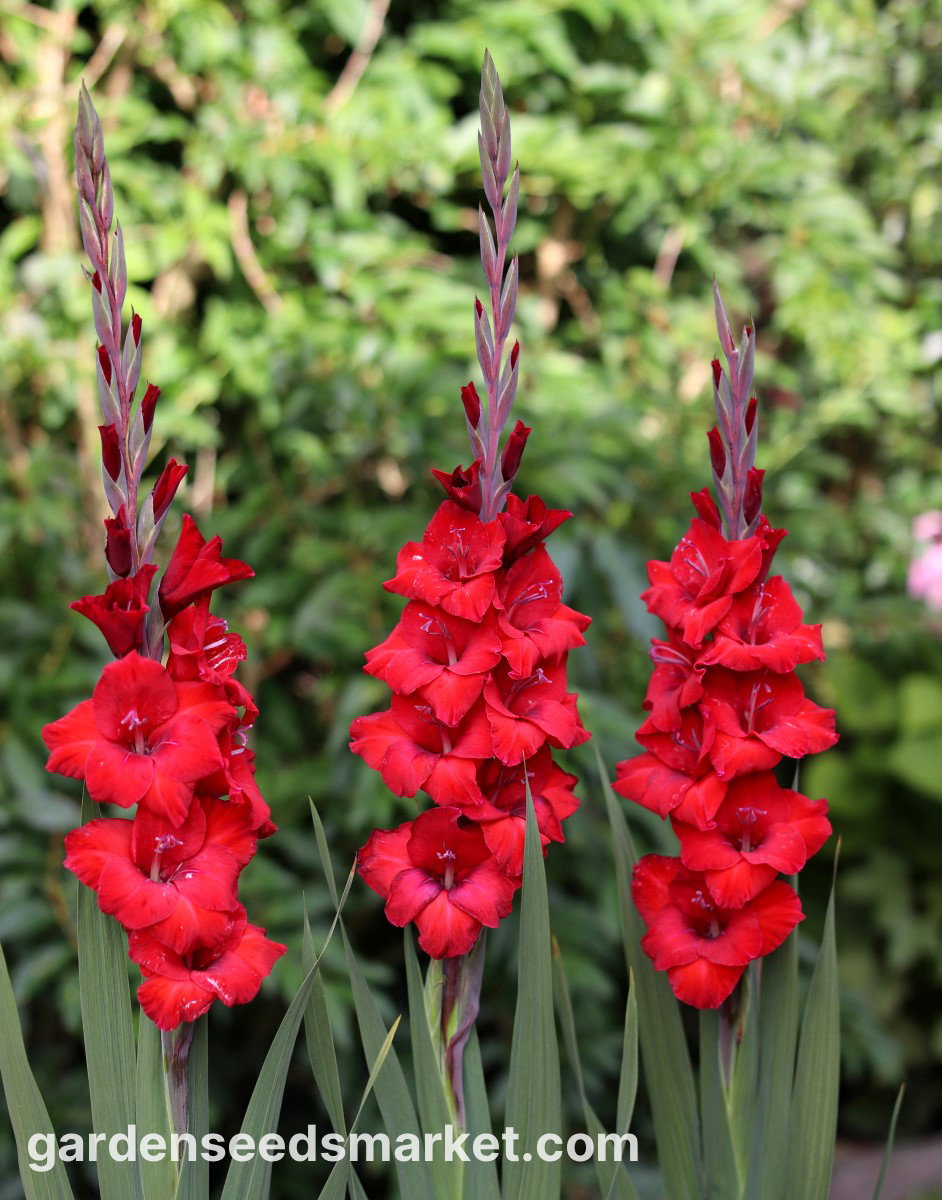


The Crossfire gladiolus that appears in the garden in summer dominates surroundings with its undeniable charm. Dark flowers with velvety petals are packed in dense clusters that contrast with the bright green colour of linear leaves. Presented gladiolus delights with the colour and abundance and belongs to the most beautiful garden flowers that bloom in July and August. This variety belongs to Bambino gladioli that is characterized by smaller height, up to 80 centimetres, than the standard large-flowered gladiolus cultivars. Reduced plant size gives you new possibilities - these plants grow better in pots and look good in smaller gardens. The Crossfire gladiolus remains fresh after being cut and wonderfully adorns interiors with its energetic colour.
There is not strictly set date of planting gladioli. Depending on the weather, planting could start mid-April or only in May. Gladioli do not like cold and wet soil. The place you choose for planting should be sunny, sheltered from the wind, and the soil: fertile, permeable, and rich in nutrients. You must dig out corms before the frost in autumn. After trimming down the stems and leaves and partial drying, transfer bulbs to a dry room where temperature remains stable in the 5 to 8?C. About a week or two before the planned planting you can transfer bulbs to a warmer place, what should stimulate them to shoot.
One package contains 5 gladioli bulbs of the presented variety. These bulbs are sized 12/14 centimetres in circumference. The basic plant information and growing instructions can be found on the package label.
- Variety: Crossfire
- Use: ornamental - garden, cut flower, planters
- Growth form: erect
- Flower colour: dark red
- Vegetation form: perennial
- Foliage: green, linear
- Site: sheltered, sunny; fertile, permeable soil rich in nutrients
- Bulb size (circumference):: 12/14 cm
- Bulbs: 5
- Height: 80 cm
- Flowering period: July to August
- Planting period: April to May
- Wintering in the ground: no
New


My account
Store
Customer information
Information
© -2026 Gardenseedsmarket.